Let’s Talk About What Actually Matters
In higher education marketing, data is ubiquitous, but not all metrics carry equal weight. The most impactful KPIs don’t just tell you what happened, they show you where to go next.
For enrollment teams, digital strategists, institutional leaders, and others, the real value lies in knowing which numbers reflect student intent, campaign impact, and long-term growth. Whether you’re shaping undergraduate recruitment or supporting adult learner outreach, the right performance indicators bring sharper focus to your strategy and more confidence to your decisions.
This guide highlights the KPIs that matter most to higher education institutions, those that directly tie to enrollment performance, return on investment (ROI), and student engagement.
What are KPI’s?
KPIs, or key performance indicators, are measurable metrics that evaluate the success of an organization or campaign in reaching its goals. In digital marketing, KPIs provide actionable insights by tracking specific objectives and helping teams make informed decisions. When putting more focus on relevant KPIs, schools can refine their marketing strategies to drive better outcomes and improve ROI.
5 Ways Higher Education Can Make the Most of Their KPIs
1. Align KPIs With Strategic Goals
It starts with purpose. Are you focused on attracting undergraduates, adult learners, or online students? Tie your KPIs to the big-picture goals your institution is working toward.
2. Leverage Data to Drive Student Success
Data isn’t just numbers. Use it to understand what resonates with students, improve communications, and help more applicants become enrolled students.
3. Enhance Marketing and Recruitment Strategies
Great digital marketing strategies begin with understanding what works. KPIs highlight which channels and messages perform best so you can amplify them.
4. Measure Impact of New Initiatives
Testing a new campaign or scholarship offer? KPIs help show if those ideas connect with your audience or need fine-tuning.
5. Refine & Re-Strategize
Data should work for you, not overwhelm you. Check in regularly and adjust as needed to stay focused on what’s truly driving results.
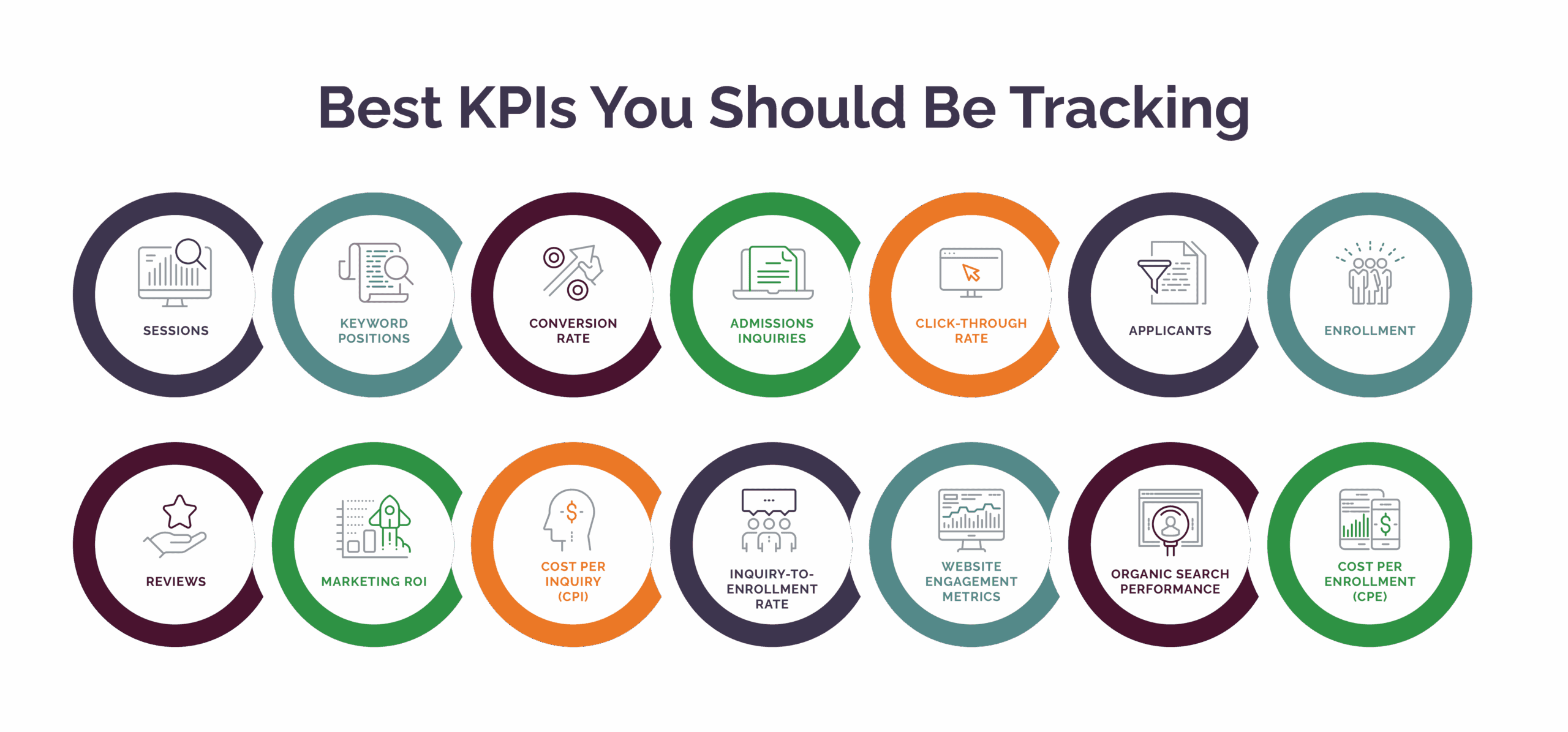
The Top KPIs You Actually Want to Track
Your team is building campaigns, launching content, and running ads, but which metrics truly show what’s working? Here are the KPIs worth your time, budget, and strategic brainpower:
Sessions
Sessions measure the number of visits to your website or other digital properties during a set period. It’s a basic but important indicator of traffic volume, and when segmented by source (organic, paid, referral), it can highlight which channels are pulling the most weight in your recruitment strategy.
Keyword Positions
Tracking keyword rankings helps you see how visible your programs are in search results. Pay close attention to high-intent terms related to degrees, certifications, or program types. This KPI is especially helpful for monitoring SEO progress and identifying new content opportunities.
Conversion Rate
Whether it’s a form submission, event registration, or information request, the conversion rate metric shows how well your website is turning visitors into leads. A high conversion rate typically signals that your messaging, user experience, and CTAs are all aligned.
Admissions Inquiries
This KPI counts the number of people reaching out for more info about your programs, whether through forms, chats, or other channels. It’s a direct measure of early interest and helps gauge the effectiveness of your top-of-funnel outreach.
CTR (Click-Through Rate)
CTR tells you the percentage of impressions that result in a click, whether it’s from search ads, social campaigns, or email sends. A strong CTR usually means your content is compelling and your targeting is on point.
Applicants
This metric tracks formal application submissions and is a critical milestone in your funnel. It’s one of the clearest signs that your campaigns are not just generating interest, but driving commitment.
Enrollment
This KPI reflects how many students complete the enrollment process and officially join your institution. It’s the ultimate performance metric and often the one most closely tied to budget justifications and leadership reporting.
Reviews
Online reviews can influence prospective students just as much as your marketing content. Tracking volume and sentiment can provide insight into brand reputation, highlight areas for improvement, and support messaging that reinforces trust.
Marketing ROI
Calculated by dividing the revenue attributed to a campaign by its cost, Marketing ROI shows the overall profitability of your digital strategy. It’s a must-have KPI when evaluating whether your investment is delivering real value.
Cost Per Inquiry (CPI)
You’re running ads, but are they bringing in the right students? CPI shows how much it costs to generate an inquiry and helps you understand budget efficiency. A lower CPI usually means your targeting and messaging are spot on.
Inquiry-to-Enrollment Rate
This KPI tracks how many prospects move from asking for info to actually enrolling. It’s a strong indicator of your team’s follow-up efforts and your funnel’s overall health.
Website Engagement Metrics (Bounce Rate, Time on Page, CTA Clicks)
What does your website really tell visitors? Metrics like time on page and click-throughs show how well your content is connecting. If visitors bounce quickly, it might be time to rethink your user experience or content strategy.
Organic Search Performance
You don’t need an endless ad budget to be found. Monitoring keyword rankings and organic traffic shows how well your higher education SEO efforts support discovery and attract high-intent prospects looking for programs like yours.
Cost Per Enrollment (CPE)
This is where strategy meets return. CPE helps you see exactly how much it costs to turn a prospect into a student. It connects your marketing investments directly to enrollment impact, making it one of the most powerful metrics for budget conversations.
Bonus KPIs That Deserve a Spot on Your Radar
Micro-Conversions (downloads, event registrations, newsletter sign-ups): Small actions show early interest and help build a pipeline.
Retention & Re-Engagement: Essential for adult learners and continuing education. These metrics help you understand who stays engaged and why.
Social Media Engagement Rate: Valuable when tied to traffic and conversions, rather than just likes and shares.
FAQ
What should universities look for when hiring a digital marketing agency?
Universities should seek agencies with higher education experience, a data-driven approach, full-service capabilities, and transparent reporting to drive measurable results.
How can a digital marketing agency improve student enrollment for universities?
Agencies can boost enrollment by running targeted campaigns, personalizing content, optimizing the website experience, and nurturing leads through retargeting and email marketing.
What KPIs should universities monitor to assess digital marketing success?
Important KPIs include website traffic, conversion rates, cost per lead (CPL), engagement metrics, and overall return on investment (ROI).
Can I use a digital marketing agency for my online university?
Yes! A strong digital marketing agency, like Zero Gravity, can optimize your university for undergraduate, graduate, online, and in-person programs.
You’re the Guide, These KPIs Are Your Compass
If your current metrics aren’t telling the full story, it might be time for a reset. Take a closer look at what you’re tracking, what’s missing, and where there’s room to grow. And if you need a team who understands higher ed marketing inside and out, we’re ready when you are. Reach out to our higher education marketing team to get started tracking the right KPIs to attract new prospective students.
At ZGM, we specialize in digital marketing for universities, including Paid Media campaigns and a higher education content strategy built specifically for enrollment-driven goals. Let’s make your next move your smartest one yet.