


If you ask revenue teams what matters most, they’ll rarely say “more leads.”
Although leads work as fuel for sales, they’re only as valuable as the revenue they generate. More leads don’t always boost revenue; in fact, low quality leads actually waste sales efforts, while sabotaging funnel health.
Here’s what truly takes precedence in B2B marketing: predictable pipelines, high close rates, efficient customer acquisition, and long term retention.
Though far too often, marketing reports track page views and social media activity, rather than revenue. While creating friction for sales and marketing teams, this disconnect also makes it harder for leadership to see marketing as a growth engine.
In 2026, knowing the B2B marketing metrics that matter isn’t just a recommendation from ZGM. It’s essential for revenue-driven growth and long-term sustainability.
Pipeline Velocity Metrics
Measuring the speed and efficiency in which leads become revenue, pipeline velocity metrics are crucial. Access to this data gives leadership some significant advantages. For starters, they can pinpoint where marketing generates return on investment, while learning more about the company’s overall health.
These metrics also assist with identifying any existing bottlenecks in the sales funnel. After revenue teams know where prospects get stuck, they can remedy the problem. In many cases, this means refining campaigns, which boosts long term optimization and marketing success.
Remember, revenue teams prioritize speed and efficiency, not just volume. More often than not, faster pipeline velocity foreshadows predictable revenue. It also highlights the strategic allocation of both sales and marketing resources.
Marketing Contribution to Revenue
All too often, sales teams get handed useless marketing reports. Filled with frivolous vanity metrics vs. revenue metrics that hold valuable insights, these reports foster a culture of distrust and frustration.
That’s why marketing contribution to revenue carries so much weight. Among the B2B marketing metrics that matter most, these insights track how much closed revenue is influenced or directly sourced by marketing.
Furthermore, marketing contribution to revenue allows leadership to identify high value channels. From there, tracking hidden influence and boosting sales velocity are natural next steps.
Understanding this means knowing how leadership and sales teams operate. For both parties, connecting marketing performance to dollars, rather than just activities, is a key trust signal.
It also paves the way for these teams to align on goals and budgets, while investing in high value initiatives.

Lead Quality Metrics (MQL → SQL Conversion)
Like pipeline velocity metrics and marketing contribution to revenue, MQL to SQL conversion is among the B2B marketing metrics that matter most. MQLs represent interest levels (such as content downloads) whereas SQLs are more indicative of buyer intent (like demo requests).
With these lead quality metrics, revenue teams can learn whether marketing is attracting leads that align with ideal customer profiles and sales readiness. MQL to SQL conversion data also helps teams grow qualified leads without pouring more resources into marketing budgets.
Over the long term, this significantly lowers the cost of customer acquisition. Amid more resources and less overhead, leadership can then pivot towards high intent strategies with better return on investment.
Conversion Rates Across Funnel Stages
In revealing where buyer drop offs occur, conversion rates across funnel stages are crucial to revenue teams. Of all B2B marketing metrics that matter, this data provides key insights into funnel health and effectiveness.
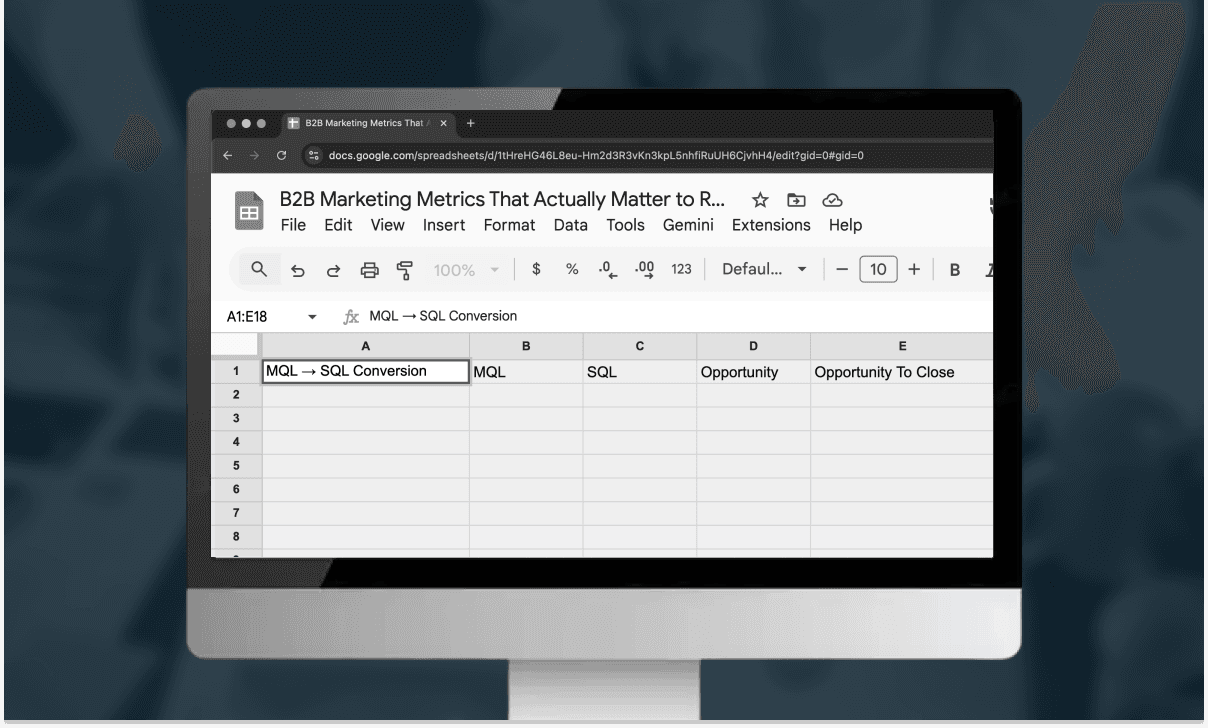
It begins with seamlessly measuring how well prospects move from one stage to the next. The funnel operates as follows: lead to MQL, then MQL to SQL, followed by SQL to opportunity, and finally, opportunity to close.
It’s through this process that revenue teams should find any existing customer breakdowns or friction points. Once that’s done, they’ll know where to make productive improvements, rather than just increasing lead volume.
Without conversion rates across funnel stages, revenue teams can waste resources on boosting lead volume, all while seeing minimal returns. This further underscores the need for constructive marketing reports with tangible revenue metrics, instead of vanity metrics.
Cost Per Revenue-Generating Opportunity
Among B2B marketing metrics that matter, cost per revenue-generating opportunity is particularly critical. This informs revenue teams about the mandatory marketing spend for creating revenue-impacting opportunities, instead of just leads.
In 2026, return on investment increasingly drives B2B budgets. Therefore, leadership should know not only the cost of marketing, but also the revenue production that follows.
Don’t forget, cost per revenue-generating opportunity doesn’t only improve predictability. It also promotes sales and marketing alignment, which builds long term trust and rapport.
With access to cost per revenue-generating opportunity metrics, both teams can agree on what constitutes a qualified opportunity. From there, bridging the gap between marketing’s lead generation efforts and sales’ revenue targets easily follows.

Get the Revenue Funnel Framework
At ZGM, we know what empowers revenue teams to succeed. At the center of it all is the revenue funnel framework.
This funnel gives leadership access to B2B marketing metrics that matter, while driving high returns on investment. In using this framework, revenue teams can track the customer journey, starting from initial awareness all the way to purchase and retention.
With marketing and sales alignment, while avoiding B2B pitfalls like vanity metrics, revenue teams will be most equipped for long term growth and customer retention.
Book a call with us today to discuss elite B2B marketing metrics for revenue teams.