Ah, the age-old debate: SEO vs. PPC. Which one should you invest in, especially if you’re in the manufacturing industry? Let’s cut through the buzzwords and get straight to the point. Today, we’re diving deep into how much manufacturers should allocate for ad campaigns versus organic search efforts. Trust us; this is one debate you’ll want to get your popcorn ready for.
For manufacturing marketers, budget allocation is never a casual conversation.
It’s a constant tug-of-war: pour dollars into PPC for fast traction or build out a long-game manufacturing SEO strategy that delivers over time? The stakes are high, and every dollar counts, especially in a space where margins matter and the sales cycle can stretch for weeks or months.
So, how do you actually decide where your marketing dollars should go?
We’ve worked with enough industrial and manufacturing brands to know this: there’s no universal formula. But there is a smarter way to approach it, one rooted in analyzing your business, understanding your buyers, and building a manufacturing marketing strategy that doesn’t just chase traffic but converts it.
Let’s break down what happens when the balance is off, how to course-correct, and what kind of results you can expect depending on where you put your spend.
SEO vs. PPC: The Dynamic Duo
If search engine optimization (SEO) and Pay-Per-Click (PPC) were superheroes, they’d be Batman and Superman – both incredible on their own but even more powerful when teamed up.
What Is SEO?
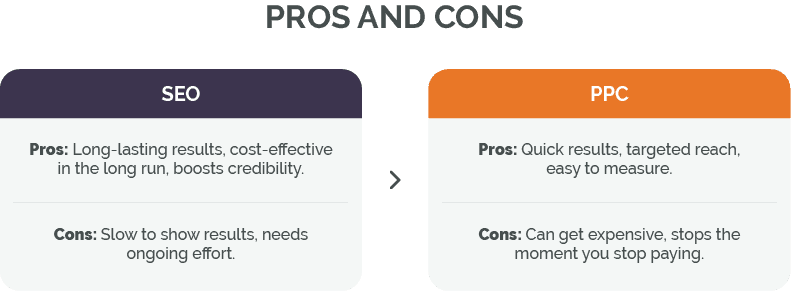
Search Engine Optimization (SEO) is like farming. You plant the seeds (content), nourish them (optimize), and wait for them to grow (rank). It’s all about getting your website to appear on the first page of search engine results organically.

What is PPC?
PPC, is more like hunting. You identify your target (keywords), aim your weapon (ads), and hope for a direct hit (clicks). It’s advertising in the digital realm, where you pay a fee each time someone clicks on your ad. Take a look at our PPC services for more insights.

The Real Challenge Behind Budgeting for SEO and PPC
For manufacturing brands, the issue isn’t knowing that both SEO and PPC matter, it’s figuring out how to make them work together in a way that’s financially efficient and performance-driven.
The Cost of Misalignment
An uneven or guesswork budget split can lead to:
- Missed search opportunities. Over-relying on paid search spend without organic support can make visibility fragile. Once the ads stop, so does the traffic.
- Wasteful ad spend. Without solid SEO data to inform PPC strategy, you’re bidding in the dark, and it adds up FAST.
- Sluggish results. Only investing in SEO? Great for the long haul, but it won’t help you fill a trade show next month or push seasonal product lines.
Rising Costs and Competitive Pressure
CPCs in the manufacturing sector aren’t getting cheaper. Depending on your product category, you could be competing with not only local players, but national distributors and global suppliers.
With paid ads for manufacturing continuing to get more expensive, you need a plan that maximizes every cent, which means understanding where organic search can lighten the load.
Common Mistakes That Sabotage ROI
- Going “all-in” on PPC without a long-term content plan
- Underestimating how long SEO takes to pay off
- Treating SEO and PPC as separate initiatives instead of parts of a larger strategy
- Setting spend based on arbitrary percentages instead of performance data
Finding the Right Mix & What to Look At Before You Spend
Before you allocate a single dollar, take stock of these key factors:
What’s the Typical Sales Cycle?
Is your product a long-consideration item with multiple decision-makers? Or a quicker purchase with short lead times?
For longer sales cycles, organic traffic via SEO is critical. Adding an SEO strategy gives prospects time and space to get familiar with your brand through blog posts, technical pages, and resources. For urgent, deadline-driven offerings, paid search for manufacturing lets you insert your solution right when buyers are actively searching.
Who Else Is Vying for the Same Clicks?
Use competitor analysis tools to find out:
- Who’s dominating organic results for your top keywords?
- Which competitors are running paid ads consistently?
- How aggressive are their PPC bids?
If your competitors are outranking you organically, paid ads may be your best bet in the short term. But that’s also your signal to invest in catching up with strategic SEO.
How Strong Is Your Existing Content?
Brands with a deep library of blog content, landing pages, and keyword-focused resources already have momentum on their side. In that case, a smart paid media strategy can amplify what’s already working.
If you’re starting from scratch? You may need to front-load both, building foundational content and securing visibility through ads.
What’s Your Timing and Goal?
- Need leads this quarter? Paid ads can do that.
- Looking to own your product niche next year? SEO sets you up for long-term dominance.
- Launching a new product or entering a new market? Consider a heavy PPC push supported by SEO-driven informational content.
Are You Measuring the Right Things?
Before you adjust spend, get clarity on what’s performing. Are you tracking:
- Cost per lead (CPL) across both paid and organic?
- Conversion paths from organic visits to form fills?
- Assisted conversions where PPC introduces the brand and SEO closes?
If you’re not watching these metrics, you’re just guessing. And guessing is expensive.
What You Can Expect From Different Budget Strategies
There’s more than one way to get results, but each route comes with trade-offs. Here’s how the split affects outcomes:
SEO-Led With PPC Support
Best for: Established brands with content equity and long sales cycles
- Builds trust and authority over time
- Delivers compounding traffic
- Lower CPL over time
- Slower initial lead gen
- Paid ads support new products, seasonal spikes, or competitor outranking
PPC-Led With Light SEO
Best for: New products, limited organic content, urgent lead gen
- Quick results and traffic
- High control over targeting
- Risk of high CPCs and short-lived returns
- SEO often remains underdeveloped, limiting long-term scalability
Balanced, Intent-Driven Strategy
Best for: Brands looking for both lead volume and brand equity
- SEO builds long-term momentum
- PPC captures short-term demand
- Integrated reporting helps shape future decisions
- Takes coordination and consistent evaluation to keep performance aligned
Seasonal PPC Bursts
Best for: Manufacturers with events, promotions, or product launches
- Highly efficient when aligned with demand
- Supports campaign-specific goals
- Can be expensive if not planned around peak search times
- Needs fast creative and landing page development
Want to see what this looks like in action? View our case studies to view real manufacturing strategies in play.
Build a Strategy That Grows With You
You don’t need to pick sides. Smart manufacturing marketers understand that paid search and organic traffic work best when they inform and strengthen each other.
SEO data reveals what your buyers care about. PPC testing shows which messages convert. Together, they give you a roadmap and a safety net.
At Zero Gravity Marketing, we work with manufacturers to create budget plans that are flexible, strategic, and built around results. If you’re ready to align your manufacturing advertising spend with actual business outcomes, we’re here for the next step.
See what’s possible when strategy drives spend. Let’s connect and build a smarter strategy together.