Like anything on the internet, social media is always changing. Established platforms update their features, new contenders emerge, and users shift where they spend their time. One of the latest platforms grabbing attention is BlueSky, initially launched by Twitter co-founder Jack Dorsey. Built as a decentralized alternative to X (formerly Twitter), BlueSky focuses on giving users more control over their data and feed experience.
With both social platforms offering microblogging formats but fundamentally different approaches, brands, marketers, and users are evaluating where to invest their time and energy.
What is BlueSky?
BlueSky is a new social media platform designed to offer users more control over their online interactions. Unlike traditional platforms that centralize control under one company, BlueSky runs on the AT Protocol (Authenticated Transfer Protocol)-letting users customize their feeds, manage data more freely, and choose their moderation preferences.
Key Features of BlueSky:
- Decentralization: Users can tailor their experience, including feed algorithms and moderation preferences.
- Customization: More freedom in how content is displayed and filtered.
- User Control: Users own their data and content, avoiding traditional platform lock-in.
- Ad-Free Environment: Currently, BlueSky focuses on organic conversations, with no in-platform advertising options.

Who’s Using BlueSky?
While it’s still expanding its user base, BlueSky has attracted early adopters who are looking for data privacy, community-focused spaces, and open-source technology.
Brands, influencers, and various industries that have been quick to experiment with BlueSky include:
- Tech innovators and blockchain communities
- Independent creators and journalists looking for open dialogue
- Brands focused on community engagement and transparency
While BlueSky’s user base is smaller compared to X, it’s growing steadily as more users seek alternatives to traditional social networks.
How Can Brands Use BlueSky for Digital Marketing?
While BlueSky doesn’t offer built-in ad options or extensive analytics (yet!), its focus on community and authenticity opens the door for brands to create more meaningful connections.
1. Audience Engagement
BlueSky’s community is made up of early adopters and users who value transparency and genuine conversation. This makes it an ideal space for brands to interact directly with users in a more intentional way. Instead of relying on algorithms to boost content, brands can focus on building trust and encouraging thoughtful discussions.
2. Brand Visibility
Without engagement-focused algorithms, visibility on BlueSky depends on strategic posting and community involvement. Content appears in chronological order, meaning timing is key-posting during peak hours when your target audience is most active increases the chances of your content being seen.
3. Marketing Opportunities
Though BlueSky lacks traditional advertising tools, brands can still build awareness and engagement through creative strategies:
- Thought Leadership: BlueSky’s community thrives on meaningful conversations. Brands can use the platform to share insights, industry news, or bold opinions that invite discussion.
- Community Engagement: Developing genuine dialogue can create loyal brand advocates. Hosting AMAs (Ask Me Anything), starting conversation threads, or collaborating with niche influencers can help brands become recognized voices.
- Product Updates & Announcements: While hard-selling isn’t the focus here, brands can use BlueSky for soft announcements, sneak peeks, or exclusive content drops.
4. Challenges & Limitations
While BlueSky presents exciting opportunities, it also comes with limitations that brands should consider:
- Smaller Audience: BlueSky’s user base is still growing, so its reach is limited compared to X.
- No Paid Ads: There’s currently no option for promoted posts or targeted advertising.
- Limited Analytics: Without in-depth insights, brands may find it harder to track performance and ROI.
- Moderation Variability: Since moderation is user-controlled, brand safety can vary depending on which communities your content reaches.
BlueSky vs X (Twitter)
Both BlueSky and X support short-form content, real-time engagement, and multimedia posts. However, since BlueSky is decentralized, users have greater control over data, moderation, and feed algorithms, while X remains centralized with advanced ads, analytics, and platform-wide moderation. BlueSky focuses on organic interactions, while X offers full-scale monetization tools.
Feature BlueSky X (Twitter) Post Character Limit 300 characters 280 characters (unverified) Platform Structure Decentralized Centralized Algorithm Control User-customizable Platform-driven algorithms Advertising Options None Paid ads, promoted posts Content Moderation User-defined Platform-controlled User Experience Chronological feed Algorithm-curated feed Analytics & Insights Basic In-depth metrics
Which Social Platform Should Your Brand Use?
Choose BlueSky If:
- You want to engage with tech-forward or privacy-conscious communities
- Building organic, community-first connections is a priority
- You’re open to experimenting on an emerging social platform with growth potential
Stick With X If:
- Your brand depends on paid social media advertising and a broader reach
- Trending topics and real-time conversations are central to your strategy
- You rely on in-depth analytics to guide your campaigns
Or…Try Both!
Balancing both platforms lets you tap into BlueSky’s growing niche communities while still using X for larger-scale reach and advertising capabilities. Each serves a distinct purpose-and together, they can round out your social marketing strategy.
How to Sign Up for BlueSky
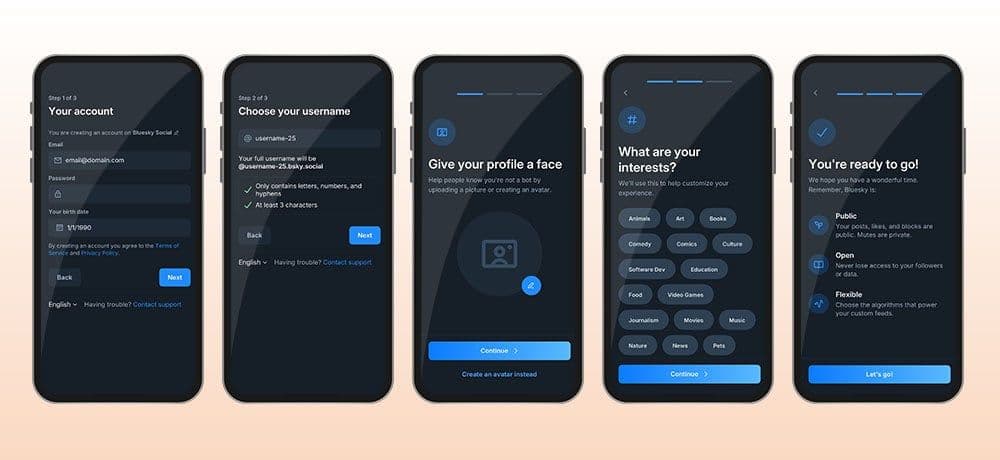
Though BlueSky started as invite-only, it’s gradually becoming more accessible. Here’s how to get started:
Step 1: Set Up Your Profile
- Choose a brand-aligned username.
- Add a profile picture, bio, and important links.
Step 2: Customize Your Settings
- Adjust privacy settings and choose the algorithm that best fits your preferences.
- Browse moderation tools to tailor your feed.
Step 3: Follow Relevant Accounts
Use hashtags and community boards to find industry leaders, potential customers, and complementary brands.
Step 4: Start Posting and Engaging
- Share updates, insights, and join ongoing conversations.
- Encourage comments and interaction to organically grow your presence.
Let a Social Media Marketing Agency Guide Your Strategy
Choosing between BlueSky and X-or managing both-doesn’t have to be complicated. Zero Gravity Marketing is here to help craft data-driven, creative strategies that fit your brand’s goals. Our team knows how to make social work for you – ready to refine your strategy? Let’s Connect!
FAQs
Q: Is BlueSky free?
A: Yes, BlueSky is free to use, though future premium features could be introduced.
Q: How does BlueSky compare to X?
A: While both platforms support short-form content and real-time engagement, BlueSky focuses on decentralization and user control, while X offers paid advertising and advanced analytics.
Q: Is BlueSky going to replace X?
A: It’s unlikely BlueSky will fully replace X, but it’s becoming a popular alternative for users seeking more control over their social experience.
Q: Who owns BlueSky?
A: BlueSky was initially supported by Twitter but now operates independently, with Jack Dorsey still involved in its development.