
In the constantly changing (especially in 2024) field of digital marketing, Artificial Intelligence (AI) has become a crucial tool for improving search engine optimization (SEO). However, incorporating AI into SEO strategies can create confusion if not done properly. Here, we’ll discuss the balance between AI-driven technology and essential human insight and provide strategies to avoid common pitfalls.
Understanding the Role of AI in SEO
How AI is Shaping SEO Practices
AI is reshaping SEO by automating complex tasks such as data analysis, keyword discovery, and content refinement. This technology enables marketers to quickly access valuable insights and adapt to the nature of search engine algorithms. The influence of AI extends to several key areas:
- Predictive Analysis: AI can analyze search trends and user behavior to predict future patterns, allowing marketers to anticipate market changes and adjust their strategies accordingly.
- Personalization: AI algorithms help in creating personalized content and recommendations for users based on their search history, location, and browsing behavior, which improves user engagement and satisfaction.
- Image and Voice Search Optimization: With the rise of image and voice search, AI content optimization will become crucial. AI helps recognize and tag images more accurately and process natural language queries effectively.
- Automated Decision-Making: AI tools can automatically adjust SEO strategies based on real-time data, such as altering meta tags, headlines, and keywords to improve search rankings without human intervention.
Common AI Pitfalls to Avoid in SEO
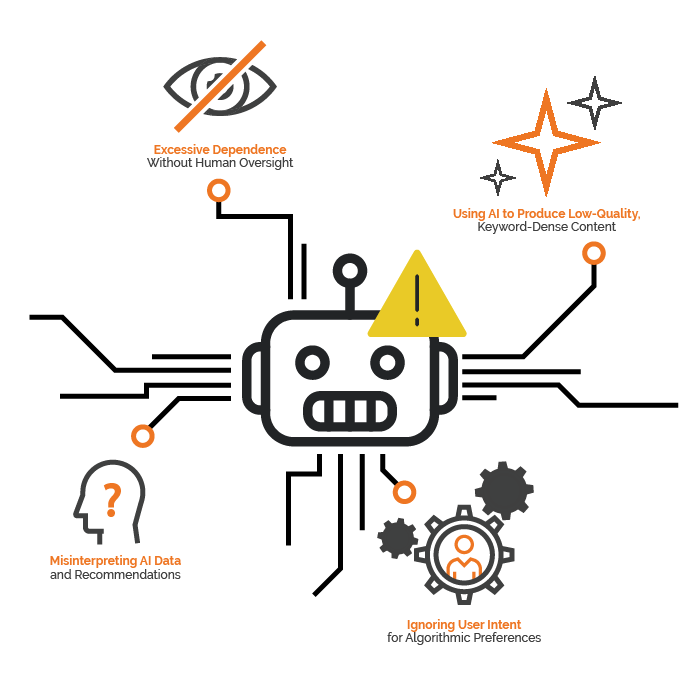
Excessive Dependence on AI Without Human Oversight
A significant pitfall in using AI for SEO is the tendency to rely too heavily on automation. AI can streamline workflows and offer data-driven insights, but it cannot grasp nuances, context, and emotion. Humanization plays a large part in the interpretation of AI data considering real-world variables and audience sentiment.
Using AI to Produce Low-Quality, Keyword-Dense Content
AI tools can create content at scale, but they might prioritize keyword density over quality. This type of content risks alienating readers and attracting penalties from search engines for keyword stuffing. High-quality content should be engaging, informative, and tailored to meet the interests of the audience (not just the algorithmic parameters).
Misinterpreting AI Data and Recommendations
AI systems process vast amounts of data to make recommendations, but without precise analysis, these suggestions can be misleading. To thoroughly interpret this data and apply it, SEO professionals will need to possess strong analytical abilities, allowing them to apply data in ways that benefit their AI strategy.
Ignoring User Intent for Algorithmic Preferences
While AI can write content for search engines, focusing solely on algorithmic preferences often leads to neglecting user intent. AI generated content still requires the human touch in order to effectively optimize for search engine. The most effective SEO strategies closely align with the needs and questions of the audience, creating content that ranks well and adds value to those who read it.
Effective AI-Driven Strategies to Boost SEO
Using AI for Advanced Keyword Research and Intent Analysis
When used correctly, AI excels in identifying patterns and predicting trends. By employing AI for keyword research and intent analysis, SEO professionals can find less obvious keywords and better understand the context in which search terms are used. This leads to more focused content strategies that align with user needs and queries.
Employing AI Tools to Optimize Technical SEO
Technical SEO can be intricate, involving site speed optimization, mobile responsiveness, and structured data. AI tools can assess a website’s technical health at scale and suggest optimizations that might be missed by human auditors, greatly improving a site’s search engine visibility.
Employing AI to Improve Content Creation
AI can offer insights into which types of content perform best for specific topics or audiences, helping to shape content creation strategies more effectively. By analyzing data on user engagement and content performance, AI refines content strategies to produce more engaging and effective material.
Best Practices for Balancing AI and Human Expertise
Maintaining Authenticity and Creativity in Content
To avoid the pitfalls of AI-generated content, infusing human creativity, authenticity, and emotional intelligence into every piece is essential. SEO professionals should use AI as a tool to interject, not replace, the human element that connects with audiences.
Regularly Revising Strategies to Align with Search Engine Changes
Search engines continually update their algorithms to improve user experience. Regularly revising your SEO strategies to reflect these changes is critical and should involve a mix of AI-driven data analysis and human intuition.
Ensuring Ethical AI Use in SEO Strategies
As with any powerful digital tool, ethical considerations must govern the use of AI in SEO. This includes respecting user privacy, avoiding manipulation, and ensuring transparency in AI-driven actions and decisions.

Combining Innovation and Human Expertise with Zero Gravity Marketing
At Zero Gravity Marketing, we understand that the intersection of AI innovation and human expertise is where true SEO success lies. We strategically combine advanced AI tools with the detail-oriented insights of our well-trained professionals to deliver customized solutions that meet the specific needs of each client. Ready to tackle your SEO strategy? Contact us today and let’s harness the power of AI together.