
Understanding why people search (and how to meet their needs) is at the heart of modern day organic SEO. Ranking on page one is no longer just about keywords and backlinks; it’s about delivering the most relevant and helpful result for the intent behind a query. That’s where search intent optimization comes in. By aligning your content strategy with user expectations, you can not only improve rankings but also attract qualified traffic that’s ready to convert. Optimizing for a variety of search queries ensures your pages meet the exact needs of users, increasing engagement and reducing missed opportunities.
In this guide, we:
- Explain what search intent optimization is and why it’s crucial for SEO success
- Define the main types of search intent, including informational, navigational, commercial, and transactional intent
- Show you how to analyze search queries and conduct keyword research to better understand user needs
- Share practical tips for aligning content creation, on-page optimization, and meta descriptions with intent
- Highlight how zero-click searches, Google search results, and AI-driven features are reshaping the search engine results page
- Provide best practices to future-proof your SEO strategy and reduce bounce rates while improving long-term performance
What Search Intent Really Means
Every search starts with a goal. A person types or speaks a query because they want to know, find, compare, or buy something. Search intent, sometimes called user intent, is the underlying purpose behind that action.
For example:
- Someone searching “best hiking boots for wide feet” isn’t just browsing boots; they’re comparing options before buying.
- A query like “how to change a flat tire” signals a need for instructions, not a sales pitch.
- If the search is “Facebook login”, the user clearly wants to reach a specific site quickly.
Incorporating keyword research into your planning process helps uncover the intent behind these phrases, ensuring your content directly matches what users are looking for.
When you understand these nuances, you can build pages that directly answer the need, making it easier for search engines to connect your content with the right audience.
Key Types of Search Intent Explained
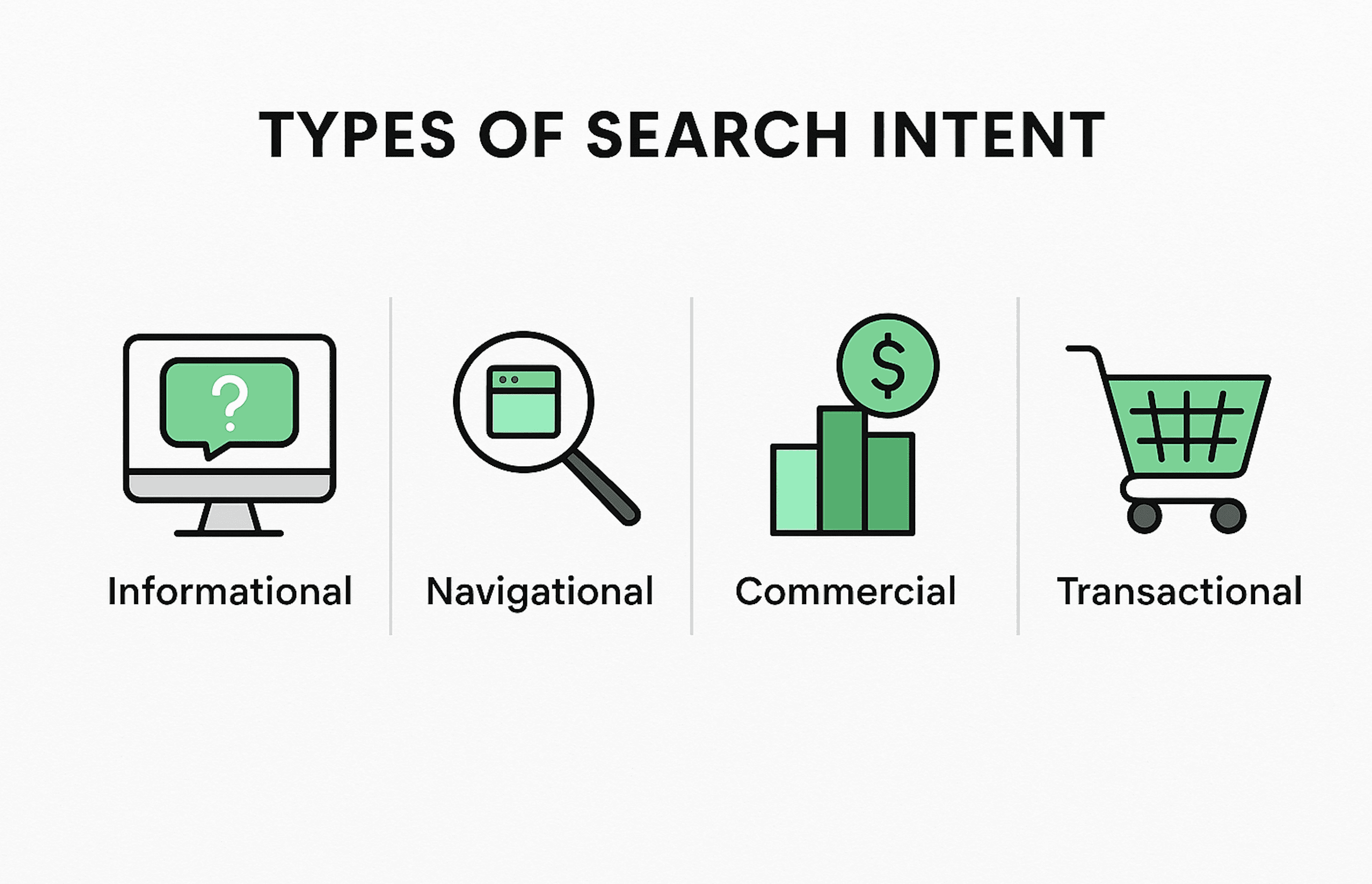
Not all searches are the same. Most fall into one of four core intent categories:
Informational Searches
Users are seeking knowledge or an answer to a question. They might want definitions, instructions, or general facts. Examples:
- “What is solar net metering?”
- “Benefits of meditation”
This informational intent is crucial to address if you want your brand to build authority early in the customer journey.
Navigational Searches
Here, the goal is to reach a specific site or page. These often include brand names or product names. Examples:
- “Nike customer service”
- “LinkedIn login page”
Addressing navigational intent means ensuring your site is easy to find, well-structured, and shows up prominently when people search for your brand or specific pages.
Commercial Searches
Also called investigational intent, these queries indicate that a user is comparing options before buying. They’re reviewing features, reading opinions, and weighing choices. Examples:
- “Best CRM software for small business”
- “Toyota Corolla vs Honda Civic reliability”
This commercial intent often overlaps with broader research-focused searches, making it important to offer detailed comparisons in your content marketing strategy.
Transactional Searches
Users with this intent are ready to take action, such as making a purchase, signing up for a demo, or downloading a resource. Examples:
- “Buy iPhone 15 online”
- “Book a yoga retreat in Bali”
Pages that target transactional intent should feature strong calls-to-action, simple navigation, and content that guides the user to convert quickly.
By classifying keywords this way, you can match your content to where users are in their journey, improving both visibility and conversion potential.
How to Determine Search Intent for Your Keywords
Knowing the types of intent is one thing; spotting it in real-world searches is another. Here are reliable ways to figure out what a query is really about:
- Check the search results: Look at what’s ranking for your target keyword. Are they blog posts, product pages, comparison lists, or how-to guides? The types of results often reveal intent.
- Watch for keyword modifiers: Terms like “buy,” “price,” or “near me” usually point to transactional or local intent. Words like “how to,” “what is,” or “tips” suggest informational intent.
- Use SEO tools: Platforms like SEMrush, Ahrefs, or Google Search Console can help you see whether a keyword drives commercial, informational, or mixed-intent traffic.
Studying related searches at the bottom of Google search results can also uncover additional variations of user intent you might have missed.
Combining these clues helps you plan content that stands a better chance of meeting user needs and ranking higher.
Practical Ways to Optimize Content for Search Intent
Once you know the intent behind a keyword, the next step is aligning your content with it. Here’s how:
- Match content type to intent: If users are researching, give them detailed comparisons, reviews, or listicles. If they’re ready to buy, make your product pages clear, fast, and persuasive.
- Answer the question right away: Avoid filler text. Put the main solution or takeaway early to show relevance quickly.
- Make it scannable: Use headings, bullet points, images, and videos to make the page easy to digest.
- Address related questions: Adding FAQs or covering common follow-ups helps capture long-tail intent and win placements in “People Also Ask.”
An effective SEO strategy combines intent alignment with strong on-page optimization, a compelling meta description, and other best practices to boost visibility and reduce bounce rates. When your content gives searchers exactly what they came for, search engines take notice.
Zero-Click Searches and Their Impact on SEO
Zero-click searches happen when users find the information they need directly on the search results page without clicking a link. Featured snippets, knowledge panels, and AI Overviews are all part of this growing trend.
While this might seem like a loss of traffic, it’s not always negative. If your content is the one providing that instant answer, you’re still gaining visibility and building authority. To optimize for these opportunities:
- Write concise answers to common questions.
- Use structured data (schema) to help search engines understand your content.
- Format lists, steps, and definitions in a way that’s easy for Google to pull.
The Evolving Role of AI in Search Intent
AI-powered search features are making results more conversational and context-aware. Instead of just showing a list of links, tools like Google’s AI Overview or Bing’s chat-based search now summarize key points or recommendations directly on the page.
This shift changes search intent in two main ways:
- Synthesized answers: AI tools may satisfy the query on the search results page itself, lowering click-through rates but increasing the importance of being cited as a trusted source.
- More natural queries: People now type or speak multi-step, conversational questions, expecting quick, specific answers.
To keep up:
- Include clear, authoritative statements that AI systems can quote or reference accurately.
- Build topical authority to increase the chances of being pulled into these summaries.
- Keep information current, factual, and supported by credible sources.
- Apply Generative Engine Optimization (GEO) principles, structuring content so it can be discovered, cited, and correctly represented in AI-generated responses and not just traditional search results.
AI isn’t replacing search, but it’s changing how users interact with information. Optimizing for intent now means creating content that works for both human readers and AI-powered discovery.
Future-Proofing Your Search Intent Optimization Strategy
Search intent optimization isn’t something you do once and forget. It requires ongoing attention as search engine algorithms, user behavior, and search features change. To stay ahead:
- Audit your content regularly to ensure it still matches user intent.
- Use schema markup to improve visibility in rich results and AI summaries.
- Build supporting resources like FAQs, guides, and related articles to strengthen your authority.
- Monitor emerging search patterns and update your keyword targeting as user behavior evolves.
Pairing intent analysis with a strong content creation plan helps ensure SEO success and keeps your site competitive across every search engine results page.
Bringing Your Search Intent Strategy Full Circle
Search intent optimization is about delivering the right content to the right person at the right time. By understanding the “why” behind every search, structuring your pages for clarity, and adjusting to changes in how search results are delivered-especially with AI reshaping the search experience-you can drive more qualified traffic and build lasting visibility.
The future of SEO belongs to brands that focus on user needs first. If you can anticipate intent and meet it better than anyone else, rankings and conversions will follow. Our team at Zero Gravity Marketing can help you refine your content marketing strategy and elevate your search engine optimization efforts. Contact us today to start building a plan that truly connects with your audience.