



As B2B marketing teams strive towards lead conversion optimization, it’s important for them to remember one key point: agreeing on the numbers doesn’t always guarantee results.
Even when executives secure sales and marketing alignment, operational clarity (not just shared KPIs) remains imperative for driving revenue growth. Time after time, the same pattern holds: alignment that lacks clear, actionable processes eventually leads to strategic gaps and execution failures.
At ZGM, we’ve seen this firsthand. High performing B2B organizations consistently operate within intentional frameworks. Among the top priorities is ensuring that teams not only share the same definition of what makes a qualified lead, but also have a smooth handoff process.
Without this due diligence, things quickly start falling apart. Marketing and sales collaboration begins to silo. Once these teams stop working towards the same goals, revenue tanks, customers are flooded with inconsistent messaging, and data gets fragmented.
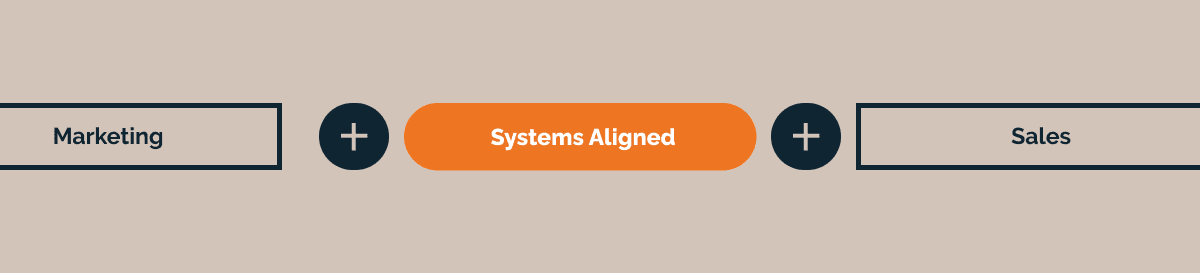
Moving forward, we’ll explore the ins and outs of persistent revenue growth challenges. We’ll also take a look at why outcome-driven alignment matters, how to overcome operational bottlenecks, and the role of shared reporting in driving revenue growth.
Hidden Misalignments That Fuel Revenue Growth Challenges
One of the most common misconceptions about revenue growth is that marketing and sales collaboration alone will deter challenges. In actuality, this is just one piece of the puzzle. Executives should adopt a broader, cross-functional strategy that takes product, finance, and customer success metrics into account.
Unfortunately, conflicting definitions of key metrics is one of the leading bottlenecks that causes revenue growth challenges. B2B organizations with misaligned timelines between marketing campaigns and sales follow-up can also struggle with revenue predictability. Over time, this leads to growth gaps and hurts long term sustainability.
As executives rightfully prioritize sales and marketing alignment, they should also be mindful of problems that sabotage revenue. Unclear accountability and poorly defined handoff points, for instance, cause significant bottlenecks and should be addressed strategically.
From Activity to Outcome Alignment
As a leading B2B growth partner, ZGM helps teams achieve outcome-driven alignment. This is how we know that it’s not enough for executives to just ensure tasks are properly executed. The outcomes of these tasks have to be shared and measurable as well.
In 2026, B2B marketing has shifted beyond generating clicks or impressions to actually delivering tangible business impacts. Moreover, while sales and marketing alignment on goals carries weight, agreement on shared revenue outcomes is even more essential. This creates mutual accountability while connecting departmental efforts to revenue and enforcing a unified customer experience.
To truly foster lead conversion optimization, marketing efforts should be synchronized with clear business outcomes. This means using data to justify budgets and refine campaigns, rather than merely tracking task completion.

As leadership teams take this approach, they’re transforming their marketing efforts. The transition from a cost center (focused on vanity metrics) to revenue-driven functions (that prioritize quality and return on investment) is a net positive that strongly benefits the organization.
Interestingly enough, shared measurable tasks actually go hand-in-hand with sales and marketing alignment. Being unified on objectives means less finger-pointing and more cooperation. By the same token, shared reporting helps teams identify funnel bottlenecks, optimize campaigns, and create a smooth customer journey.
The Power of Shared Reporting and Revenue Visibility
B2B organizations that embrace shared reporting and revenue visibility are setting themselves up for success. This approach removes ambiguity by structuring sales and marketing alignment around the revenue pipeline.
In this domain, executive dashboards also operate as excellent tools for clarity and accountability. Serving as a single source of truth, these dashboards offer transparency, thus connecting marketing activities to pipeline and revenue outcomes.
With ambiguity finally eliminated, executives can move beyond vanity metrics, directing their bandwidth towards win rates, pipeline velocity, and other actionable data. In the long run, this empowers B2B organizations via greater sales efficiency, better resource allocation, and accurate forecasting.
See What True Revenue Alignment Looks Like
Here at ZGM, one of our primary missions is setting up B2B leadership teams for success. That means helping them build RevOps credibility and operational oversight, while still maintaining sales and marketing alignment.
This has never been more critical in the current B2B landscape. Leaders with mature RevOps functions consistently see higher profitability and revenue growth. True alignment requires a shift from outdated tool management functions to operational oversight of forecasting data accuracy, and AI integration.
In 2026, you don’t have to take this on by yourself. Book a call with ZGM for strategic insights on bolstering revenue growth while streamlining lead conversion optimization.