
You’ve heard a lot of chatter recently. Is AI killing SEO? While the answer is, Absolutely Not, that doesn’t mean that AI isn’t changing the way SEO’s need to strategize their efforts.
Search engine optimization has always been about adapting to change. Every time Google rolls out a new Algorithm update or shifts the way it evaluates websites, businesses need to adjust their strategies. Machine learning has amplified this pace of change, and it’s now reshaping SEO in ways that go far beyond keyword lists or technical tweaks.
What was once a “nice-to-have” marketing strategy, is now more important than ever. Whether you run a C-suite corporation or an online University, or even a local coffee shop, SEO is essential. Let’s explore how machine learning is changing the world of search and how to stay competitive.
SEO's Evolution in an ML-Driven World
Move Over Keywords, Hello Context
Move over keywords. It’s all about context marketing in 2025 and looking ahead into future years.
Not long ago, SEO was built almost entirely around keywords. If you had the right words in your title tags, headers, and body copy, you had a pretty good shot at ranking. Machine learning changed that equation by teaching search engines to prioritize meaning over exact phrasing. Google’s algorithms now evaluate the context of content, aligning it with user intent rather than just scanning for matches.
This shift towards a more user-friendly approach is important because it rewards brands that create authentic, relevant content instead of chasing keyword density. It also forces marketers to think about how people search in natural, conversational ways, whether by typing long-tail queries or speaking into voice assistants.
What is Machine Learning SEO?
Machine learning is a branch of artificial intelligence that enables computers to identify patterns and improve performance over time by learning from data without being explicitly programmed.
Machine learning SEO, on the other hand, refers to the practice of optimizing websites and content with the understanding that search engines increasingly rely on machine learning to rank results.
Instead of focusing only on exact-match keywords, machine learning SEO emphasizes context, user intent, and behavior signals. Search engines, like Google, use algorithms that continually learn from data, such as click patterns, dwell time, and search trends, to deliver the most relevant results to its audience.
To optimize marketing initiatives, this means adopting SEO strategies that align with how these models interpret meaning and quality, creating high-quality content and user-friendly experiences that resonate with both an audience and algorithms.
Why Embrace ML?
Machine learning SEO is about more than keeping up with algorithm updates, it’s about embracing a smarter, more predictive approach to optimization. ML models process enormous volumes of data, helping search engines connect users with content that satisfies their intent. For marketers to capitalize on this opportunity, tapping into this intelligence can mean anticipating shifts before they fully register on traditional SEO dashboards.
How Machine Learning Powers Modern Search Engines
Search engines use machine learning to recognize patterns and improve over time. From click-through data to bounce rates, algorithms learn what signals matter most for delivering relevance. This ongoing learning process creates a more accurate search environment, which benefits both users and brands willing to adapt.
Google’s AI-First Approach: From RankBrain to MUM
Google has made its priorities clear: AI and ML are the engines driving search forward. Initially introduced in 2015, RankBrain introduced machine learning into the core algorithm by interpreting queries it had never seen before.
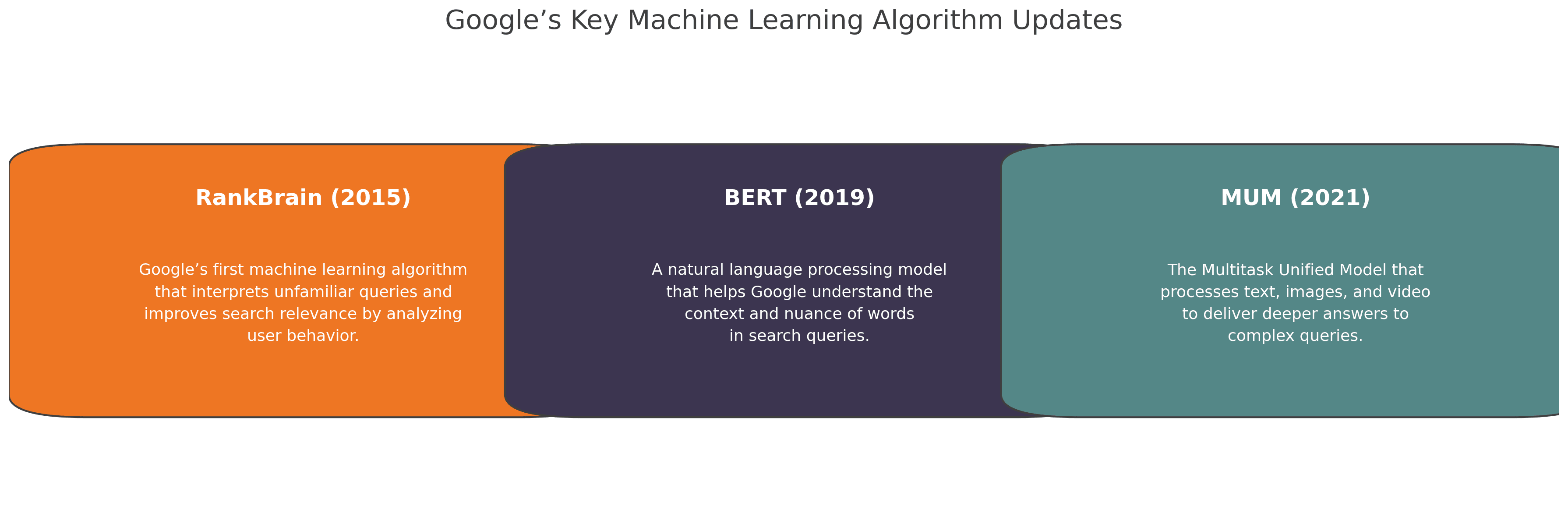
Later, BERT helped Google understand nuance in language. Today, the Multitask Unified Model (MUM) is pushing boundaries by interpreting information across formats ie.) text, images, and video, to deliver richer answers. Google’s own updates confirm that these models will continue shaping search at scale.
Delivering Relevance in Search
Understand User Intent with NLP and Semantic Search
Natural Language Processing (NLP) allows search engines to understand not just the words in a query but the intent behind them. To create a stronger SEO strategy, this means optimizing for themes and semantic clusters rather than isolated keywords.
How ML Algorithms Shape Search Results
Machine learning allows Google to adjust results in near real-time. If users consistently click one result and stay engaged, that signal helps elevate similar content. If a page drives quick bounces, it may slip. These dynamic adjustments make SEO more fluid than ever.
Continuous Learning of User Behavior and Algorithm Updates
Every interaction feeds back into the machine. User behavior (scroll depth, dwell time, click-through rate) creates a feedback loop that informs ranking adjustments. This is why high-quality, user-first content is essential.
Core Applications of Machine Learning in SEO
Revolutionize Keyword Research and User Intent Analysis
Traditional keyword research tools have limitations, but ML-powered platforms can analyze millions of queries, cluster them by topic, and surface intent-driven opportunities. This helps marketers align with how customers actually search.
Enhancing Content Creation and Optimization
From AI-assisted outlines to real-time optimization suggestions, ML helps content creators build assets that align with user intent. At ZGM, our content team uses AI to brainstorm ideas, identify gaps, and support scalable campaigns while always adding the human touch to ensure quality.
Optimizing Technical SEO at Scale
Large websites with thousands of URLs benefit from ML-driven crawling and indexing analysis. Technical tools can flag anomalies, identify which pages bring the most value, and predict which fixes will deliver the strongest results for your technical SEO strategies.
Strategic Link Building and Authority Signals
Machine learning tools evaluate backlinks at scale, filtering out low-value sources and surfacing meaningful authority opportunities. This saves time and ensures your link profile contributes to sustainable rankings.
Deepening User Experience (UX) and Behavioral Analytics
User signals are more influential than ever. ML-driven heatmaps, session analysis, and predictive UX testing reveal how visitors interact with your site, guiding improvements that directly affect SEO performance.
It’s Time to Embrace Predictive SEO
Forecasting Search Trends & Market Shifts with ML Models
ML doesn’t just analyze the past but predicts the future. By analyzing seasonal patterns and behavioral signals, marketers can anticipate when certain products or services will trend. For example, tools like Google Trends, uses machine learning to provide real-time insights that inform smarter campaigns.
Gaining a Competitive Edge Through ML-Driven Intelligence
Competitors may still be optimizing reactively, waiting for search rankings to shift before adjusting strategy. Predictive SEO allows you to move faster, positioning your brand ahead of the curve.
Data-Driven Decision Making for Future-Proof SEO
Instead of waiting for monthly reports, ML can generate near real-time forecasts that inform budget allocation, campaign adjustments, and content strategy.
Leverage ML-Powered SEO Tools and Technologies
AI/ML Tools for SEO Professionals
From keyword clustering to content optimization and log-file analysis, today’s ML-powered tools make SEO both smarter and more efficient. Solutions like SEMrush, Ahrefs, and SurferSEO incorporate ML capabilities to provide insights at scale.
What we love about the SEO tools that have been in our Arsenal for years, is that they’re constantly adapting to the new world of search. Ahrefs launched their new Brand Radar tool, that allows SEO professionals to check and report on the status of their AI citations.
The Human-AI Synergy in SEO
How Important is Human Expertise?
Even the best machine learning tools can’t replace human judgment. Algorithms can crunch numbers, but they don’t understand nuance, brand voice, or ethical implications.
Collaboration and Critical Thinking
The future of SEO depends on pairing machine insights with human creativity. Marketers who can analyze data critically and translate it into meaningful campaigns will outpace those who rely solely on automation.
Upskilling to Embrace Data Science and AI Literacy
SEO professionals who learn data science basics and AI literacy will have a major advantage. This doesn’t mean becoming a data scientist, but it does mean understanding how models work, where their limits lie, and how to apply their output strategically.
Optimize the Future
Machine learning will continue reshaping SEO. What worked five years ago won’t work five years from now, and the pace of change is only accelerating. Businesses shouldn’t view this as a threat but rather, an opportunity. By adapting to ML-driven search and investing in strategies that put people first, you can build resilience and long-term visibility.
How ZGM Helps Clients Leverage Machine Learning for SEO
At Zero Gravity Marketing, we believe that SEO is stronger when powered by data and guided by strategy. Our SEO team uses ML-powered tools to inform smarter campaigns, improve content relevance, and optimize performance at scale. But we also bring the human side like relationship-building, creative insight, and a transparent approach that sets us apart.
If you’re ready to integrate machine learning into your SEO strategy, connect with us. Let’s make your brand stand out where it matters most.