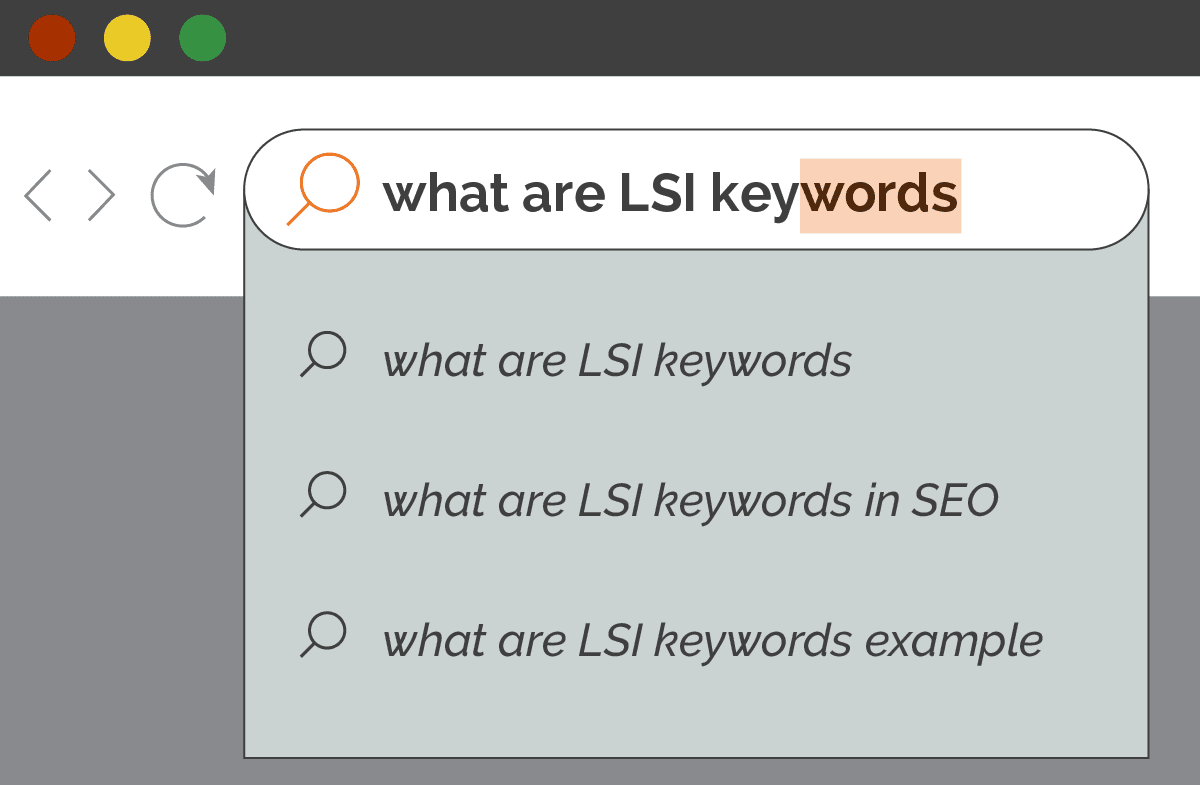
Due to the constant change in the world of SEO, keywords are a core component, but search engines have developed beyond simple phrase matching. Google now relies on complex algorithms to understand relationships between words, allowing it to interpret search intent more accurately.
This is where Latent Semantic Indexing (LSI) keywords come into the conversation. Some marketers believe that LSI keywords help search engines better analyze content, leading to stronger rankings. But is that really the case? And does Google use LSI in its search algorithms?
Here, we’ll cover:
✅ What LSI keywords are and how they work
✅ Whether Google uses LSI for SEO rankings
✅ How to find and use semantic keywords to improve content
✅ Best practices for optimizing SEO without relying on LSI myths
What Are LSI Keywords in SEO?
LSI (Latent Semantic Indexing) keywords refer to words and phrases that are closely related to a primary keyword. Unlike synonyms, LSI keywords are terms that often appear together when discussing a particular topic.
For instance, if your main keyword is “digital marketing,” relevant LSI keywords might include:
Since these terms frequently show up in conversations and articles about digital marketing, using related terms helps search engines understand the broader topic of your content (not just relying on an exact keyword match).
But does Google use LSI as part of its ranking system?
How LSI Works
LSI is a mathematical model originally developed to improve how databases organize and retrieve information. It analyzes large amounts of text to determine patterns in word usage, grouping terms together based on natural associations.
How LSI Identifies Word Relationships
Imagine scanning thousands of articles about email marketing. You’ll notice that terms like subject lines, open rates, automation, and conversion rates appear together frequently. Instead of treating each term in isolation, LSI recognizes that these words belong to the same discussion.
In the context of SEO, some believe that LSI enables search engines to better interpret content themes rather than just focusing on a single keyword or keyword phrase. By incorporating LSI keywords, a webpage can appear more relevant to a variety of search queries.

Does Google Use Latent Semantic Indexing?
The short answer: No, Google does not use LSI in its search algorithms.
This is one of the biggest SEO misconceptions still circulating today. While LSI was a major advancement in early search technology, Google now uses far more advanced AI-driven methods to interpret language, context, and search intent.
Why Google Doesn’t Use LSI
Google has confirmed that LSI is not part of its search algorithms. Instead, it relies on more sophisticated techniques to interpret words in context and rank pages based on relevance.
Some of the core technologies Google uses include:
1. Natural Language Processing (NLP)
NLP allows Google to understand sentence structure, synonyms, and intent rather than focusing on keyword repetition.
2. BERT Algorithm (Bidirectional Encoder Representations from Transformers)
BERT is a machine-learning model that improves how Google interprets search queries, particularly longer, more conversational phrases.
For example, in the query:
“Can you book a flight for someone else?”
Older search models might have ignored “for someone else,” but BERT recognizes its importance, producing more accurate search results.
3. Entity Recognition & Context-Based Search
Instead of relying on LSI, Google identifies key entities-people, places, brands, or concepts-and uses them to understand the context of a query. This is why a search for “Apple” might return information about the company or the fruit depending on the user’s intent.
What This Means for SEO
Since Google does not use LSI, marketers don’t need to focus on “LSI keywords” as a ranking factor. Instead, focus on creating detailed, well-structured content that naturally includes related terms and fully answers user questions.
How to Identify and Use Semantic Keywords
Even though LSI isn’t part of Google’s algorithm, semantic keywords still play an important role in SEO. Here’s how to find them:
1. Use Google’s Search Features
Start by typing your keyword into Google and paying attention to:
- Autocomplete suggestions (as you type)
- “People Also Ask” questions
- Related searches at the bottom of the page
These sections provide real-time insights into what users are searching for.
2. Research High-Ranking Pages
Look at the top search results for your keyword. What phrases and subtopics do they cover? Tools like Ahrefs and Semrush can help analyze content from competitors.
3. Use AI-Based SEO Tools
AI tools & platforms like Frase, Clearscope, and Surfer SEO analyze the language used in top-ranking content and suggest semantically relevant terms to include in your writing.
Best Practices for Using Semantic Keywords
Finding related terms is only half the battle-how you use them matters just as much.
✔️Write in a natural, conversational tone. Avoid keyword stuffing and focus on readability.
✔️Incorporate related terms in headings and subheadings. This helps organize and reinforce your topic.
✔️Optimize meta descriptions and image alt text to boost visibility.
✔️Answer common user questions. Addressing different aspects of a topic makes your content more informative and relevant.
✔️Create well-researched, in-depth content. Pages that fully cover a subject tend to rank better.
Improve Your SEO Strategy with the Right Content
While LSI keywords themselves are not a ranking factor, semantic SEO remains crucial for creating relevant, high-quality content. Google prioritizes pages that are well-written, informative, and aligned with search intent-which is why focusing on content depth is far more effective than chasing LSI myths.
Looking to improve your content strategy? Zero Gravity Marketing specializes in SEO, keyword research, and content marketing to help businesses rank higher and drive more traffic. Let’s build a stronger SEO strategy-contact us today and see how we can help!