Search engine optimization (SEO) and search engine marketing (SEM) are the peanut butter and jelly in your digital marketing sandwich. Yes, you can use just one, either SEO or SEM, but like PB&J, they create something extra special together.
The first step to developing a top-notch search strategy is knowing the difference between SEM and SEO. Next, you need to know how to use each to get search engine traffic. Keep reading to learn more about how SEO and SEM work and how to make each one work for your brand.
What’s the Difference Between SEO and SEM?
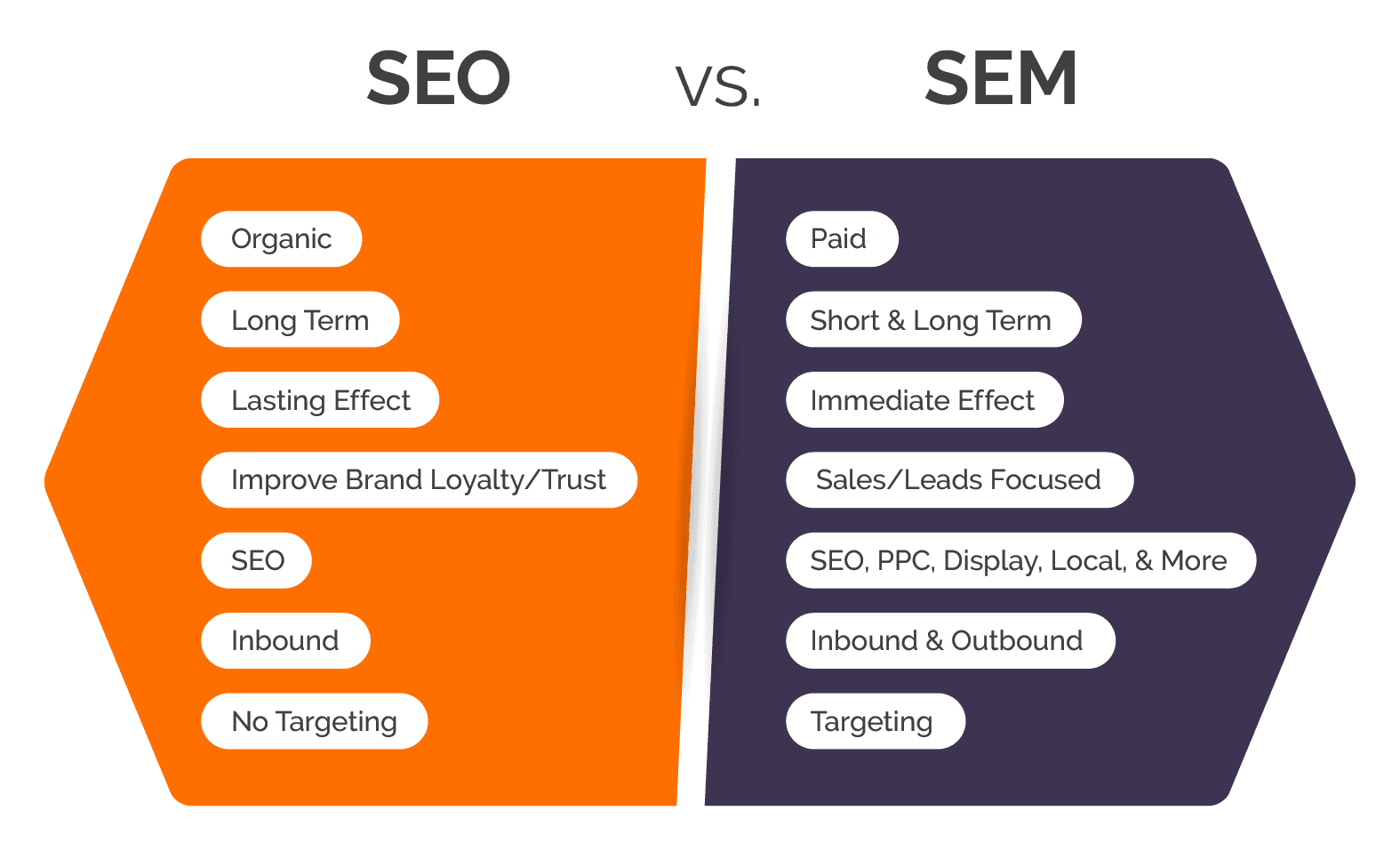
SEO, aka search engine optimization, improves a website to appear higher in organic search engine results. Organic search refers to the results you get when a user types in a keyword phrase or question. Think of it as traffic that is earned, not bought.
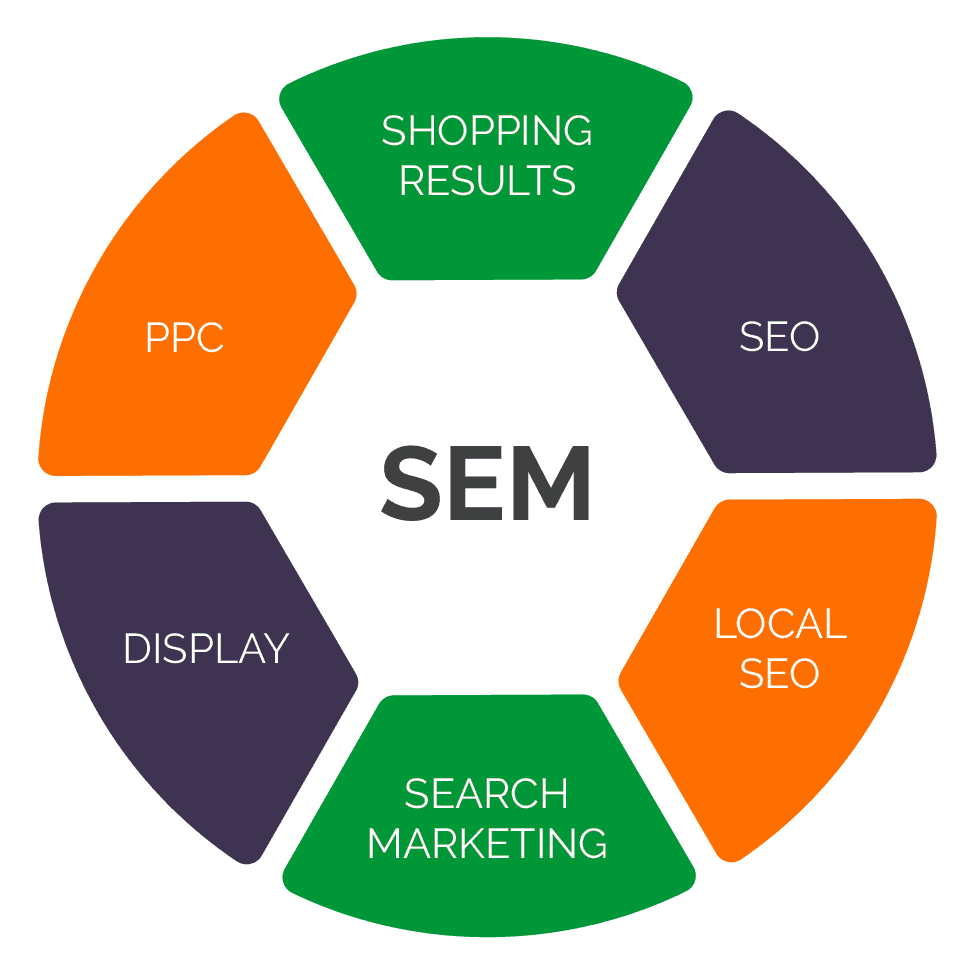
While SEO focuses on organic search, search engine marketing, aka SEM, centers around paid advertising. Those “sponsored” results or ads you see at the top or bottom of the search engine results page (SERP) are an example of SEM in action. Pay-Per-Click (PPC) advertising is a common component of SEM: you bid on keywords and pay when (and only when) someone clicks on your ad. Bidding on your priority keywords, with the commitment to pay, is what secures those prime SERP positions.
That means visibility from organic rankings remains statistically the dominant driver of traffic. However, paid search is a powerful way to fill gaps, especially for highly competitive keywords, promotions, or rapid lead generation needs. Industry studies indicate that PPC often yields strong early conversions, even if overall traffic share is smaller, making both SEO and SEM crucial strategies to improve your website traffic and land more leads.
How Each Strategy Works
The Basics of SEO
Search engines send crawlers across the web to analyze websites, following internal and external links, to assess what the site is about, site quality, and relevance for particular search queries. Optimizing for SEO means preparing your site, so crawlers can effectively find and interpret your content.
The SEO process involves four key parts: keyword research, on-page SEO, off-page SEO, and technical SEO.
Keyword research
Keywords still matter for SEO. As you prepare your website, find out what keywords your intended audience uses and create content around those keywords. You don’t want to go overboard here or “keyword stuff.” But focusing a webpage or blog post around a commonly searched keyword phrase is a fundamental part of your SEO strategy when it comes to ranking for new queries.
Modern keyword tools now use machine learning and natural language processing to surface terms that align with user intent, search volume, and competitor strategies. They help you focus on keywords that are likely to drive meaningful traffic without falling into the trap of keyword stuffing.
On-page SEO
Matching your content to searcher intent matters more than ever. This means using target and related keywords naturally throughout the page, improving readability with scannable formats and headers, and optimizing images, meta tags, and mobile usability. User experience signals (like time on page and scroll depth) have become stronger ranking considerations.
Off-page SEO
Things that happen beyond your website can also improve your SEO. Off-page SEO refers to those factors that improve your search results but don’t exist on your webpage. A common off-site factor is backlinks to your site, ideally from authoritative or legit sites.
Authority matters because it’s a ranking of how likely your site is to appear in search results, but brands now also focus on digital presence beyond backlinks. Online trust is built via external mentions, brand visibility, and content cited by AI. Backlinks from authoritative sources remain essential, but today’s SEO also values consistent citations and topical credibility.
Technical SEO
Even the best content won’t rank if search engines can’t crawl or index it properly. Think of technical SEO as all the behind-the-scenes details that ensure your site ends up on the SERP in the first place. Technical SEO ensures fast page load times, mobile-first rendering, clear site structure, and secure browsing. These foundational elements remain non-negotiable for visibility, because they’re what allow and enhance your site’s accessibility, and allow crawlers to access and index your site.
The Basics of SEM
Like SEO, an SEM marketing strategy is made up of several key steps:
Keyword research
Keyword research matters as much for SEM as they do for SEO. Focus on selecting high-intent search terms that closely align with your audience’s goals. Modern SEM tools often leverage machine learning to suggest long-tail phrases and detect emerging trends across competitive campaigns.
Bid setting
With PPC, you pay each time someone clicks your ad. You set maximum bids for keyword auctions, but platforms such as Google Ads now use AI-powered bidding systems like Smart Bidding to automatically optimize bids by predicting user behavior, device usage, location, and time of day.
Ad creation
The goal of PPC/SEM is to get users to click on your ads and visit your site. Your ad must capture attention and convey value quickly. In addition to crafting compelling headlines and descriptions, today’s best practices include using responsive ad formats and even AI-generated ad copy variants that test multiple versions for optimized performance.
Audience targeting
With PPC, you decide who sees your ads based on criteria like location, demographics, and interests. This precision helps you reach people already interested in your products or services, thus boosting ad relevance and campaign efficiency. In fact, targeted campaigns often deliver higher click-through and conversion rates by focusing on specific segments instead of casting a wide net. Utilizing multiple targeting layers, like geographic filters paired with user behavior, ensures your ads reach users most likely to convert, making every click count.
When to Use SEO, SEM, or Both
Use SEO When
- You can wait up to six months to see results, like leads, traffic, and sales.
- You want a digital marketing strategy that doesn’t depend on ad spend.
- You can stay on top of your SEO (or hire an SEO agency to do it).
- You’re looking to generate sustainable traffic that compounds over time.
- You need to build credibility and organic trust with users and search engines.
- You want to reduce long-term customer acquisition costs by relying on earned visibility.
- You prefer crediting long-term value over short-term gains, and are prepared to invest in quality content and strategy.
Use SEM When
- You need traffic, leads, or sales STAT.
- You want to improve your presence in competitive search results.
- You have the time and energy to manage your PPC ads (or you can hire an SEM agency).
- You’re running time-sensitive campaigns like product launches, sales, or events that need immediate exposure.
- You want to test keywords, ad messaging, and landing pages quickly before investing in long-form content.
- You need precise targeting to reach specific audience segments (e.g. by location, behavior, in-market intent, or previous site activity).
- You’re looking to capture first-party user data and conversion metrics in near real time for optimization and strategic insights.
Why a Combined Strategy Often Wins
The good news is you don’t have to choose between SEO and SEM. The two marketing strategies can work together to significantly boost your site’s search engine presence, helping your brand reach both short and long term goals.
When SEO and SEM are combined in an omnichannel approach, your brand shows up everywhere, creating a seamless experience across customer touchpoints. This layered visibility improves credibility, ensures you capture attention across the entire buyer journey, and prevents gaps when one channel underperforms.
SEM provides immediate results, allowing you to test keywords, ad copy, and offers quickly. Those insights can be fed back into your SEO content strategy to prioritize the terms that drive traffic and conversions. At the same time, strong SEO content reduces reliance on paid ads over time and builds long-term equity. Together, this hybrid strategy maximizes the effectiveness of each channel and improves return on investment.
- SEO has no ad spend
- SEO works around the clock
- SEM is immediate
- SEM is targeted
- SEM is cost-effective
Choosing the Right Strategy for Your Business
One of the big differences between SEO and SEM is the cost. You do have to pay for SEM but not SEO. If you can do one but not the other right now, here’s what to consider when making your choice:
- Your goals: Think about what you want to get out of your SEO or SEM campaign. Are you targeting top-of-funnel users at the beginning of their journey? Or do you want to connect with people who are ready to buy? The answer can be both, in which case a mix of SEO and SEM will work for you.
- Your timeframe: Are you jumping into digital marketing for the long haul or want a quick boost? Do you want to improve your website in the long run?
- Your keywords: SEM and SEO depend on keywords, but the type of keywords you’ll use differs. If you find that informational keywords work best for your brand, SEO will pay off. But if the best keywords for you are hard to rank for, you will want to use PPC/SEM. The same is true if you use ad-heavy keywords.
Work With The Search Marketing Experts at Zero Gravity Marketing
Zero Gravity Marketing is here for you if you need help building a long-term digital marketing strategy that incorporates SEO and SEM. We offer SEO and SEM packages and a full range of digital marketing solutions. To learn more about our services, sign up for your FREE digital marketing analysis.